Documenting Financial Matters
Your family desperately needs one thing when you're gone: clarity about your money. Bank accounts. Investment accounts. Insurance policies. Retirement accounts. Cryptocurrency. Loans. Without documentation, they face chaos — months of searching for accounts, missing deadlines for claims, potentially losing assets. Trust Blocks helps you document all financial accounts, access methods, and instructions so your executor and beneficiaries can settle your estate smoothly and find all your assets.
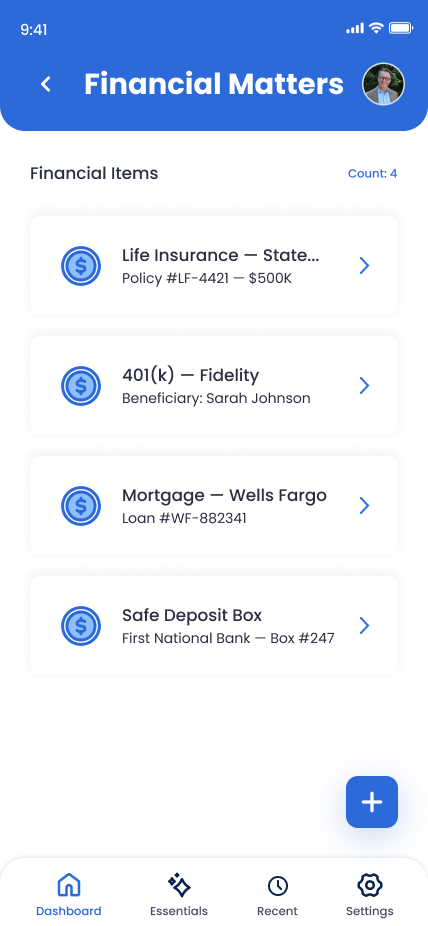
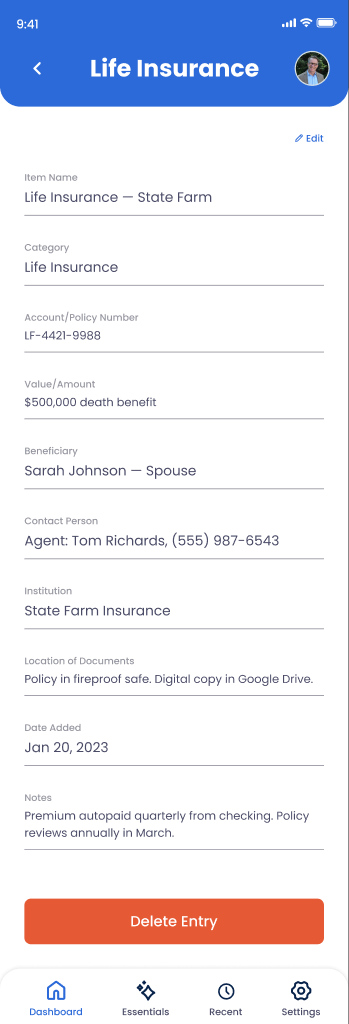
What You Can Document
Bank & Checking Accounts
Institution name, account type, account number, and access instructions for all checking, savings, and money market accounts.
Investment Accounts
Brokerage accounts, stock holdings, bonds, mutual funds, including login credentials and contact information for the provider.
Real Estate & Property
Property address, deed information, mortgage details, lender contact, property tax info, and any liens or encumbrances.
Insurance Policies
Life insurance, health insurance, car insurance, homeowners insurance — policy numbers, providers, coverage amounts, and beneficiaries.
Retirement & Pension
401(k), IRA, pensions, annuities — account numbers, custodians, beneficiary designations, and withdrawal instructions.
Debts & Liabilities
Credit cards, loans, mortgages, auto loans — creditor contact, account numbers, current balance, and payment status.
Cryptocurrency & Digital Assets
Wallet addresses, exchange accounts, cold storage locations, private keys (encrypted), and instructions for access and transfer.
Special Instructions
Specific wishes for how accounts should be handled, distributions to beneficiaries, tax considerations, and special circumstances.
How to Document Financial Accounts
Go to Digital Legacy > Financial
From your Trust Blocks dashboard, navigate to Digital Legacy and select Financial Matters. You'll see your existing financial accounts and a button to add new ones.
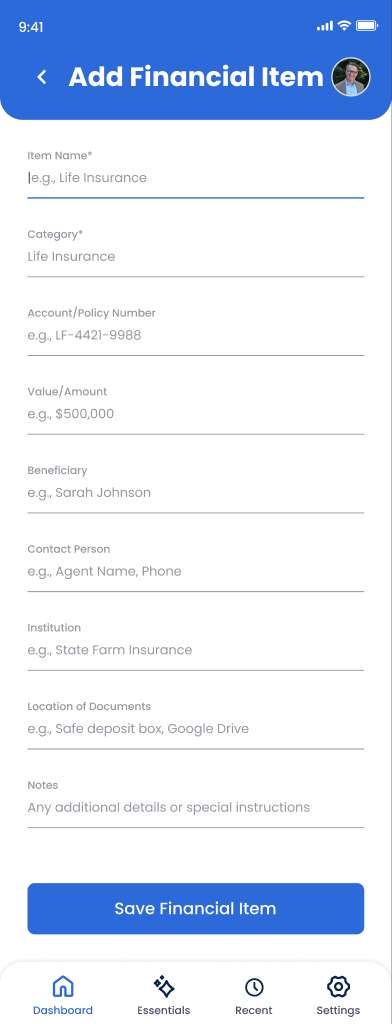
Click "Add Account"
Tap to open the financial account form. Trust Blocks guides you through documenting each account with all critical information.
Select Account Type
Choose from the list: Bank, Investment, Property, Insurance, Retirement, Debt, Cryptocurrency, or Other. This helps organize your financial picture.
Enter Institution Details
Institution name (bank, brokerage, insurance company), account type, account number, routing number (if applicable), and the account holder's name on the account.
Provide Access Credentials
Username, password, security questions, or other access information needed to log in. Trust Blocks encrypts this, and only the beneficiaries you authorize can view it.
Document Current Balance & Details
Approximate current balance, interest rate (if applicable), beneficiary designation, and any special terms. This provides context when the account is accessed.
Add Provider Contact Information
Phone number, website, address, and contact name if you have an account manager. Include instructions for how to reach someone who can help with account transfer or closure.
Note Special Instructions
"Transfer to executor," "Pay outstanding mortgage," "Distribute to beneficiaries as follows," or any specific wishes for how this account should be handled. Be clear about your intent.
Save
Review the account entry, then save. Trust Blocks securely stores all your financial information. You can edit or delete accounts as circumstances change.
Managing Your Financial Information
Why This Matters
Without financial documentation, your family faces a financial nightmare. They don't know about accounts. They miss deadlines for insurance claims. They can't access investment accounts. Bills go unpaid. Taxes aren't filed. Asset division becomes a legal battle. Studies show that on average, families take 6+ months to locate all financial accounts — months during which accounts could have gone dormant, unclaimed funds accumulate penalties, or critical deadlines pass.
More importantly, incomplete financial documentation can cost your family real money. A life insurance claim goes unpaid because no one knew the policy existed. An investment account is unclaimed for so long it goes to the state. A 401(k) is lost because the beneficiary designation was misunderstood.
By documenting your finances in Trust Blocks, you're giving your family a complete roadmap. You're removing months of searching and guesswork. You're ensuring every asset is found, every claim is filed, and every beneficiary receives what you intended. This is the most practical gift you can give your family.
Tips for Financial Documentation
Don't Forget Obscure Accounts
Old Roth IRAs, forgotten investment accounts, dormant savings accounts — these are easy to miss but could have money sitting in them. Think back through your financial history and document everything.
Update After Financial Changes
Got a new job with a new 401(k)? Refinanced your mortgage? Got life insurance? Bought cryptocurrency? Update Trust Blocks immediately. Stale financial information is worse than none at all.
Verify Beneficiary Designations
Log into your financial accounts and confirm who the named beneficiaries are. Document them in Trust Blocks. If they don't match your actual wishes, contact the institution and update them immediately.
Discuss with Your Executor
The person handling your estate needs to know your financial picture. Walk through your accounts with them, show them Trust Blocks, and make sure they understand your wishes. Open communication now prevents confusion later.